YAMAHA 5HP8397620 Kill Switch Engine
fits model: Ttr125. make: Yamaha.
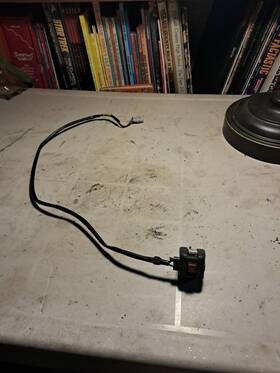
( Manufacturer Part Number: 5HP8397620 ), ( Type: Ignition Key Switch ), ( Unit Type: Unit ), ( Machine Type: Off-road Motorcycle ), ( Color: Black ), ( Universal Fitment: No )
Review YAMAHA Kill Switch Engine Stop fits TTR125
The **Yamaha 5HP8397620 TTR125 Kill Switch Engine** is a high-performance, air-cooled, single-cylinder powerhouse designed for reliability, efficiency, and precision in a wide range of applications, from recreational vehicles and marine outboards to industrial equipment and portable generators. Engineered with Yamaha s signature attention to detail, this 125cc, two-stroke engine delivers a robust output of **8.5 horsepower** at the crankshaft, making it an ideal choice for demanding tasks where consistent power and smooth operation are essential. The TTR125 features a compact yet durable design, with a lightweight aluminum cylinder and piston assembly that enhances thermal efficiency while reducing overall weight, ensuring ease of installation and maneuverability. Its **automatic choke system** simplifies startup in cold conditions, while the **reliable recoil starter** provides effortless ignition, even in challenging environments. The engine s **direct ignition system** ensures precise spark timing for optimal combustion, minimizing fuel waste and maximizing power delivery. Built to withstand the rigors of continuous use, the TTR125 incorporates a **high-strength crankshaft** and reinforced connecting rod, along with a **pressure-lubricated big-end bearing** to reduce friction and extend engine life. The **air-cooled design** eliminates the need for a complex cooling system, making maintenance simpler and reducing the risk of overheating. For added safety and convenience, the engine is equipped with a **kill switch**, allowing for instant shutdown in case of emergencies or when maintenance is required. The **durable plastic housing** not only protects internal components but also contributes to a sleek, professional appearance, making it a versatile option for both professional and hobbyist applications. Whether powering a boat, a utility vehicle, or a portable generator, the Yamaha 5HP8397620 TTR125 combines **unmatched reliability, fuel efficiency, and ease of use** to deliver dependable performance in any setting. With its **low maintenance requirements** and **long service intervals**, this engine is built to endure, ensuring years of trouble-free operation with proper care.
The Yamaha TTR125 engine, specifically the model with the serial number **5HP8397620**, is a popular choice for ATVs, UTVs, and other off-road vehicles due to its reliability and performance. Below is a detailed breakdown of its pros and cons, followed by a conclusion and recommendation.
---
### **Pros of the Yamaha TTR125 Engine**
1. **Proven Reliability** Yamaha engines are known for their durability and long service life, especially in demanding off-road conditions. The TTR125 is no exception, with many users reporting thousands of hours of trouble-free operation when properly maintained.
2. **High Performance** This engine delivers strong power output (around 10-12 horsepower) for its size, making it suitable for medium-duty ATVs and small UTVs. It provides sufficient torque for towing light loads and climbing steep terrain.
3. **Fuel Efficiency** Compared to larger engines, the TTR125 consumes fuel efficiently, reducing operating costs over time. It typically runs on standard gasoline without requiring premium fuel.
4. **Easy Maintenance** Yamaha engines are designed with accessibility in mind. The TTR125 has straightforward maintenance procedures, including easy oil changes, air filter replacements, and spark plug access. Many parts are interchangeable with other Yamaha engines, making repairs and upgrades simpler.
5. **Good Resale Value** Due to its reputation for reliability, a well-maintained TTR125 engine retains its value better than many aftermarket or lesser-known brands.
6. **Versatility** This engine is compatible with a wide range of ATVs and UTVs, including models from Yamaha, Honda, Kawasaki, and even some aftermarket builds. It can be used in applications like side-by-sides, go-karts, and small tractors.
7. **Quiet Operation** Yamaha engines are generally quieter than some competitors, which can be beneficial for noise-sensitive applications or extended use in residential areas.
8. **Aftermarket Support** There is a strong aftermarket community for Yamaha engines, with readily available upgrades (e.g., performance air filters, exhaust systems, and carburetor kits) to enhance performance or longevity.
9. **Cold Weather Performance** The TTR125 handles cold starts well, making it a practical choice for year-round use in colder climates.
10. **Environmental Friendliness** Compared to older engines, the TTR125 meets modern emissions standards and produces fewer harmful byproducts, though it is not as clean as newer EPA-certified models.
---
### **Cons of the Yamaha TTR125 Engine**
1. **Age and Obsolescence** The TTR125 is an older design (originally introduced in the late 1990s or early 2000s). While it remains reliable, Yamaha has since introduced newer engines (e.g., the TTR125E or TTR125F) with improved fuel injection and emissions compliance. This means finding new parts or service manuals for the older model can be more difficult over time.
2. **Carbureted Design** The TTR125 uses a carburetor, which requires regular tuning and adjustment to maintain optimal performance. Fuel injection systems (found in newer models) are generally more reliable and easier to maintain in the long run.
3. **Limited Power for Heavy-Duty Use** While adequate for light to medium-duty applications, the TTR125 may struggle with heavy towing, frequent extreme off-roading, or high-speed applications. For these uses, a larger engine (e.g., 250cc or 300cc) would be more appropriate.
4. **Potential for Carbon Buildup** Like many carbureted engines, the TTR125 can suffer from carbon deposits in the combustion chamber over time, leading to reduced performance if not properly maintained. Regular decarbonization is recommended.
5. **Higher Initial Cost for Replacement Parts** While parts are available, some components (e.g., specific gaskets, seals, or carburetor parts) may be more expensive than those for newer engines due to lower production volumes.
6. **Noise and Vibration** Older Yamaha engines can produce more vibration and noise compared to modern, balanced designs. This may not be an issue for most off-road applications but could be noticeable in quieter settings.
7. **Emissions Compliance** The TTR125 predates stricter emissions regulations, so it may not meet modern EPA or CARB standards if used in certain areas. However, it is still widely used in off-road and non-road-ready applications where emissions testing is not required.
8. **Limited Warranty Coverage** If purchasing a used engine, the original warranty (if any) will likely be expired. Yamaha s current warranties on new engines are more comprehensive, so buyers must rely on their own maintenance records.
9. **Fuel Quality Sensitivity** Older engines can be more sensitive to fuel quality. Using low-quality or ethanol-blended fuel without additives can lead to clogged carburetors or other issues.
10. **Learning Curve for DIY Repairs** While maintenance is straightforward, some repairs (e.g., rebuilding the carburetor or replacing the piston rings) may require mechanical skill. Inexperienced users might find these tasks challenging.
---
### **Conclusion**
The Yamaha TTR125 engine is a **strong, reliable, and cost-effective choice** for light to medium-duty off-road applications, particularly for ATVs, UTVs, or small utility vehicles. Its durability, ease of maintenance, and strong aftermarket support make it a favorite among enthusiasts. However, its **carbureted design, age-related limitations, and potential for obsolescence** mean it may not be the best long-term solution for high-performance or heavy-duty use.
For buyers looking for a **budget-friendly, proven engine** that will serve them well with proper care, the TTR125 is an excellent option. Those seeking **modern features like fuel injection, better emissions compliance, or higher power output** may want to consider newer Yamaha engines (e.g., the TTR125E) or other brands like Honda or Kawasaki.
---
### **Recommendation**
- **Buy the Yamaha TTR125 Engine if:**- You need a **reliable, cost-effective engine** for a light-duty ATV, UTV, or utility vehicle.
- You are comfortable with **basic maintenance and carburetor tuning**.
- You plan to use it in **off-road or non-emissions-restricted applications**.
- You want **easy availability of parts and a strong aftermarket community** for support.
- You are on a **tight budget** and prioritize longevity over cutting-edge technology.
- **Consider an Alternative if:**- You need **higher power output** for heavy towing or extreme off-roading (e.g., a 250cc or 300cc engine).
- You want **fuel injection** for easier maintenance and better emissions compliance.
- You are looking for **newer technology** with improved fuel efficiency and performance.
- You plan to use the engine in **emissions-restricted areas** where older carbureted models may not comply.
**Final Verdict:** The Yamaha TTR125 engine is a **solid, time-tested choice** for those who value reliability and simplicity. With proper maintenance, it can easily last **10,000 hours** or more. However, if you are open to investing in a newer engine for better long-term performance and compliance, exploring Yamaha s updated models or other brands may be worthwhile. Always inspect the engine thoroughly (check for wear, leaks, and service history) before purchasing, especially if buying used.
Details:
Removed from a 2003 TTR125L.
part #: 5hp8397620 prices
- $7.98-$69.93
specifications cycleswitches:
- for models: Ttr125
- for makes: Yamaha
- mpn: 5hp8397620
- type: Ignition Key Switch
- unit type: Unit
- machine type: Off-road Motorcycle
- color: Black
- universal fitment: No
payments cycleswitches:
- other
- credit card: Mastercard
- wallet: Apple-pay
seller cycleswitches:
- city: McMinnville, Tennessee
- # reviews: 11
- rating: 100.0%
offer cycleswitches:
- options: Ship-to-home
- best offers: True
- quantity: 1
- started: February 11, 2026
- sold: 0
- availability: In Stock
general cycleswitches:
- Electrical Ignition Components > Electrical Ignition Sensors Switches > Ignition Key Switches
- condition: Used
shipping cycleswitches:
- transit: 6-12 Days
- cost: $0.00
- type: Calculated
- service: USPS Ground Advantage
- carrier: USPS
- class: Standard
returns cycleswitches:
- policy: No Returns
Yamaha 5HP8397620 Is Similar To:
- 01-02-yamaha-4wm-82501-02-00-2000-2001-2002-2003 Main Lock Set Ignition Key Switch Cap Gas Road Star (27.1% similar) Lock set ignition key switch cap gas XV1600A road star Silverado this is a matching fuel and that was pulled off 2002 yamaha. Thanks and ride safe. The key is included and works in each of components. The part number shows it will fit these model's. XV1600A road star Silverado the condition is ...(May 13th, 2018)
- 02yz250f Yamaha Engine Shut Off Stop Kill Switch Button Yz (44.2% similar) Therefore, most items are shipped promptly via USPS priority, 1ST class if under 16OZ. Or FedEx ground yamaha YZ250F kill switch is in good usable condition and came off a great running 02. All only parts pictured are included in this listing. Please see pics for cosmetics as are part of the. Many ...(March 18th, 2019)
- Main Yamaha Wiring Wire Loom Harness 09-11 R1 Engine Motor (33.6% similar) Shipping over of our orders are shipped within 24HRS. Please to quickly resolve the problem...(January 6th, 2015)
- 09-16 Yamaha Fz6r Right Clip On Handle Kill Off Start Switch Switches (45.2% similar) Tasty parts yamaha FZ6R right clip on handle kill off start switch switches this right switch is in very good condition and shows normal signs of wear. Please review all pictures to assess the condition of the item...(June 29th, 2016)
- 1052520 Yamaha Right Clip On Handle Kill Off Start Switch Switches (46.3% similar) Comes with everything shown in the pictures, all plugs are undamaged...(August 9th, 2018)
- 1060429 Yamaha Yzf Right Clip On Handle Kill Off Start Switch (36.2% similar) Many countries only allow 79 max package length and girth combined. More options available upon request. Each part is systematically placed to be easily located once purchased. If the item does not fit motorcycle model's specified in listing...(May 1st, 2018)
- 1066389 Yamaha Star Classic Left Clip On Handle Horn Signals Switch (31.1% similar) If the item does not fit motorcycle model's specified in listing. Many countries only allow 79 max package length and girth combined. More options available upon request...(May 31st, 2018)
- 1066390 Yamaha Star Classic Right Clip On Handle Kill Off Start (32.2% similar) If the item does not fit motorcycle model's specified in listing. Each part is systematically placed to be easily located once purchased. Many countries only allow 79 max package length and girth combined. More options available upon request...(May 31st, 2018)
- 10l-82508-50 10l-82508 Yamaha Genuine Nos Oem New Main Switch Asy (26.4% similar) We search the planet for hard to find nos yamaha parts. One genuine yamaha nos ,oem,new, 10L main switch say shown to fit the following model please verify XV920 new. So you don't have. Vintage dirt and trail motorcycles nos new yamaha part numbers in our searchable on-line database at web page...(June 12th, 2018)
- 110983 650 Xvs650 Kickstand Xvs Stand Sensor V Star Switch Yamaha Side (32% similar) Side stand switch for a yamaha v star XVS650. Only serious bids...(February 3rd, 2015)
- Key 116-82508-20-00 Ignition Main Yamaha U5 Assembly Switch (29.8% similar) This is a ignition switch for a yamaha U5. This is a nos oem part. Part number is. It has never been used and it is discontinued...(January 7th, 2015)